
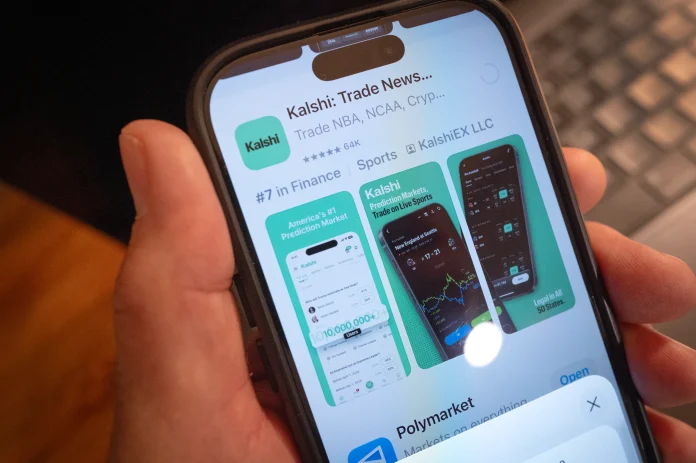
The U.S. Court of Appeals for the Third Circuit upheld the lower court’s ruling allowing prediction market platform Kalshi to continue offering in New Jersey contracts tied to the outcomes of college sports contests. The state insisted on banning such products, relying on its own laws that restrict betting on college sports and impose strict rules on sportsbooks. The court, however, found these arguments insufficient.
Why the appeals court sided with the platform
The legal logic of the decision rests on how Kalshi’s contracts are classified. The court found them to be futures and swap contracts—i.e., derivatives—rather than traditional sports bets. It follows that regulation of such instruments falls within the exclusive jurisdiction of the federal Commodity Futures Trading Commission (CFTC). The state’s rules on who may take bets and on which contests are, in this case, “preempted” by federal law.
Judge David Porter, writing for the majority, emphasized: “The federal government has regulated the derivatives market for more than a century. And it delegated that regulation to the CFTC, which has expertise in swaps, including event contracts.”
The decision was issued by a divided three-judge panel: two sided with Kalshi, and one filed a dissent. All three were appointed by Republican presidents.
“Alchemy” and a “costume-change trick,” according to the dissenting judge
Judge Jane Richards Roth called Kalshi’s actions “alchemy” and a “showy trick,” saying the company simply rebranded sports betting as futures to get out from under state oversight.
To support her position, Roth cited a specific example. According to her, on the Kalshi platform in connection with an NFL game between the Carolina Panthers and the Tampa Bay Buccaneers, contracts were available that were virtually indistinguishable from products offered by licensed online sportsbooks:
- a bet on the winner (moneyline),
- a bet on whether Tampa Bay will win by more than 2.5 points (point spread),
- a bet on the teams’ combined score being 45 points or more (over/under),
- a bet on whether wide receiver Mike Evans will score a touchdown (a player prop bet).
How a prediction market works and what an event contract is
A prediction market is a venue where participants buy and sell contracts tied to the outcomes of real-world events: from elections and earthquakes to fluctuations in oil prices. A so-called “event contract,” or swap, is a derivative whose payout depends on whether an event with economic consequences occurs, typically by a specified date.
Lawsuits across the country and their standard defense
Kalshi and another major platform, Polymarket, have repeatedly faced lawsuits in various states. The claims were based on the allegation that the platforms violate local gambling and sports-betting laws.
Both companies defend themselves the same way: their products are swaps, and the Commodity Exchange Act grants the CFTC exclusive authority over such instruments, leaving states no room to intervene.
The federal government is stepping up its fight with state regulators
Earlier this month, federal authorities moved to even more active measures. The government filed lawsuits against Arizona, Connecticut, and Illinois, accusing the states of trying to apply local gambling laws to prediction markets in ways that encroach on the federal regulatory domain.
The dispute is tied to the fact that the decision to legalize online gambling platforms is made at the state level, not the federal level. Accordingly, if event-based predictions are deemed sports betting, then local gambling laws do indeed apply to the platforms. This division is precisely the main reason for thorny legal edge cases.
However, various restrictions regarding gambling exist not only in the United States but also in other countries, including those where online casinos are fully legal. For example, in New Zealand you can play at online casinos, but only on offshore sites that operate outside the country’s jurisdiction. This is borne out, among other things, by information we found at the top of search results from the No Deposit Bonuses NZ website about online casinos that offer players no-deposit bonuses. All platforms included in the list are foreign sites.
India has also followed the U.S. path and left the legalization of online casinos to state governments. However, such an approach opens up a host of opportunities for legal disputes.
The specter of insider trading
The platforms have also come under close scrutiny for another reason. A number of suspiciously well-timed trades gave rise to allegations of possible insider access to information. Among the most high-profile episodes:
- contracts that “predicted” an operation to detain Venezuelan President Nicolás Maduro,
- bets on a change in oil prices just minutes before President Trump announced a delay in strikes on Iran’s energy infrastructure,
- trades that coincided with the administration’s suspension of its tariff policy.
Kalshi’s conflict-of-interest safeguards
Last month, the company announced steps to combat insider trading. Politicians were barred from trading contracts tied to their own election campaigns, and athletes were restricted from participating in markets related to their sport.
The appeals court’s decision preserves Kalshi’s ability to offer sports contracts in New Jersey despite the state’s objections. The dispute itself fits into a broader conflict over who has the right to regulate the rapidly growing prediction markets industry: individual states or federal authorities.



