The NCAA Division I Men’s Basketball Tournament, or March Madness, begins on the second Tuesday of the month. Each year, 68 teams—including 32 conference champions—compete to become national champions.
In 2022, the American Gaming Association estimated that 45 million Americans would bet on the tournament. That figure represented about $3 billion in betting volume.
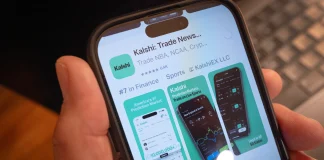
Between 2010 and 2021, smartphone ownership in the U.S. rose from 20.2% of the population to almost 73%. With easy internet access and increased smartphone ownership, many gamblers prefer to place their wagers online.
An estimated 19 million online sports bettors were in the U.S. in 2022. That number may exceed 23 million in 2023.
What role does mobile technology play in March Madness?
Let’s take a closer look.
How Does Mobile Technology Affect March Madness?
From the player’s standpoint, mobile technology impacts the March Madness tournament through machine learning and predictive modeling. Coaches and teams can use these tools to analyze data.
By entering historical data, teams may use artificial intelligence (AI) via software to identify strengths and weaknesses. They could run more effective plays in particular scenarios.
AI helps coaches to create better offensive and defensive positioning while players wear biometric devices to track health data. These tools enhance performance and reduce injuries.
The NCAA may also allow basketball sensors to measure dribbling and shooting location. That could help recruiters find the best talent and better understand opponents.
Thus, mobile technology may affect March Madness by making games more competitive.
Live Betting: What Are In-Game Odds?
One of the most attractive features of online sports wagering comes from live betting. In-game odds shift and change in real-time to give bettors more opportunities. Sportsbooks use industry software to maximize betting potential.
Betting on March Madness games previously would have been more static. You’d bet on a team you thought would win their respective matchup, and that’s it.
Mobile technology now allows live betting, including proposition (prop) bets. For example, you might wager on a player’s point totals, blocks, or rebounds.
In-play betting creates an exponential amount of wagers for gamblers at online sportsbooks. Statistical analysis makes it possible, with a game-changing free throw or a three-pointer in the remaining few seconds.
Live betting occurs once a game has started. With a smartphone and a simple internet connection, bettors may place their wagers during the game from anywhere. In-game prop bets might be the best way to maximize your winning potential.
You’ll want to develop a March Madness betting strategy to become an effective sports bettor.
Mobile Technology Trends in College Basketball
New mobile technology impacts college basketball from behind the scenes. The average March Madness viewer might need to be made aware of the power of those tools to alter the outcomes of games.
Players may use the HomeCourt app—an official partner of the NBA to improve jump shots. The app uses machine learning and computer vision to measure various metrics, including shot arcs and launch angles.
After recording themselves, players could adjust their jumpers to become more accurate.
Fans also get better experiences with mobile technology like SkyCam and RailCam systems. There are also multi-game streaming options, virtual shot clocks, and the NCAA’s “Hype Wall.”
The Hype Wall debuted in 2021 as a combined effort between Drive Studio, Turner Sports, and CBS Sports. It brings tournament catchphrases to life through rich text, colors, and 3D graphics.
Other industry trends include mobile ticketing, streaming apps, and bracketology.
For those who need to get up to date with college basketball teams, bracketology is a great way to introduce yourself to the enormity of the March Madness experience.
Visit ESPN or CBSSports.com to get the latest information on NCAA games. You’ll find updated brackets, including the First Four, upcoming contests, and teams on the bubble.
Machine learning and data analysis help to refine bracketology—to make the most accurate predictions throughout the tournament.
In-game mobile technology includes digital scoreboards and high-definition displays showcasing video replays and promotional offers.
Fans and players can also access Learning Management Systems through video games and esports programs. Stadiums might even use Wi-Fi networks for mobile food ordering.
Mobile technology revolutionizes March Madness in almost every aspect.
Conclusion
The impact of mobile technology on March Madness vastly improves in-game experiences for college basketball fans. Digital tickets, Wi-Fi access points, and mobile food and beverage options help to increase fan engagement.
College basketball teams now use analysts to boost their understanding of in-game metrics. Smartphones may also measure health data among players to maximize their potential while preventing injuries.
As technology gets better, March Madness games may become more competitive. Lower seeds might even get a shot at making their way to the Final Four or better.
Mobile technology advances the March Madness experience for players and fans alike.
Which teams do you like in this year’s tournament?